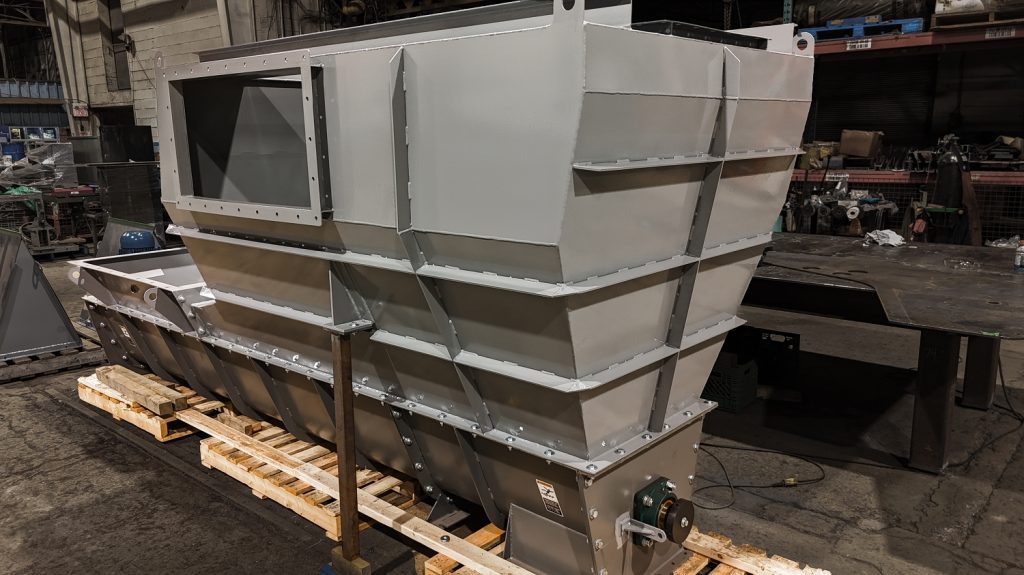
Ward designs and manufactures custom screw conveyors in Canada for demanding industrial bulk-material-handling applications.
Screw Conveyors Explained: Design, Applications, and Practical Considerations
Screw conveyors are a common solution for moving bulk materials, but they are not a universal answer. Their performance depends heavily on material characteristics, layout constraints, and how the system is designed and built.
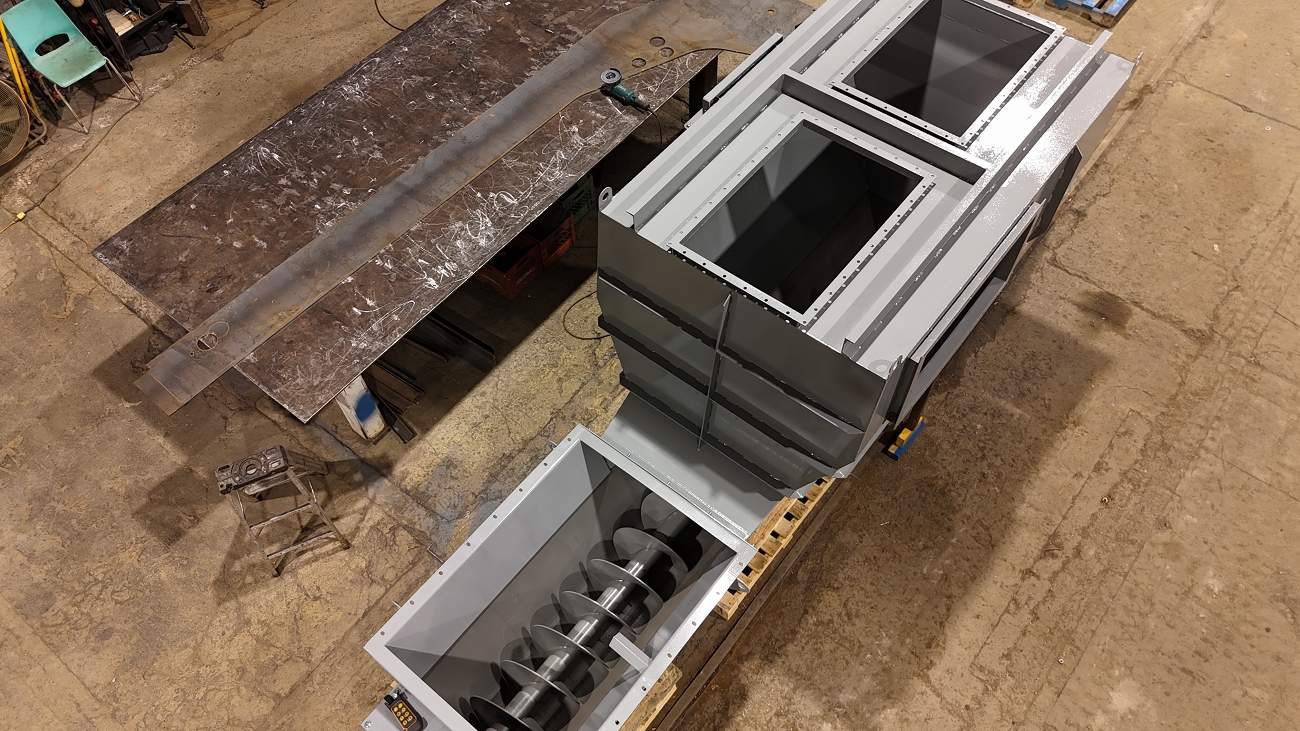
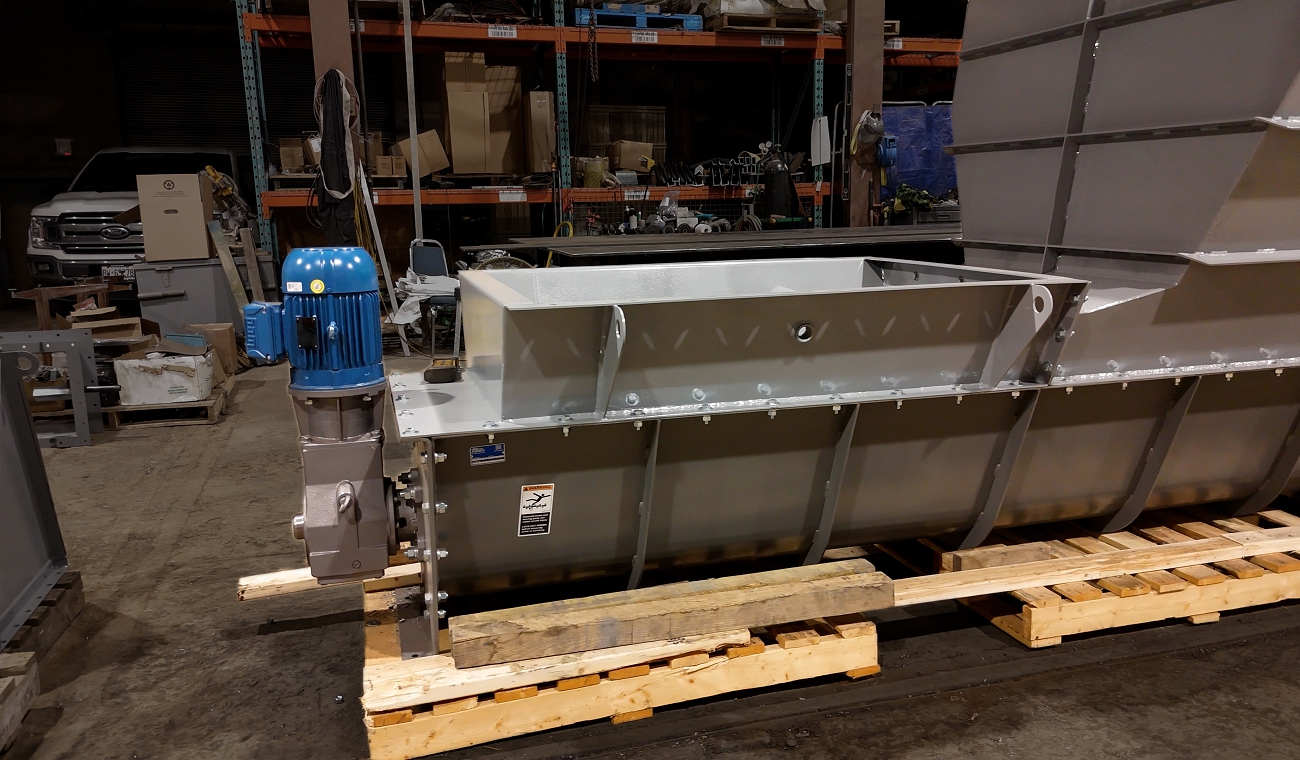
Here is a practical overview of screw conveyors, illustrated with a recent design-build project completed in our shop. The goal is to explain how screw conveyors fit into an overall solution, where they make sense, and where their limitations should be considered.
What Is a Screw Conveyor?
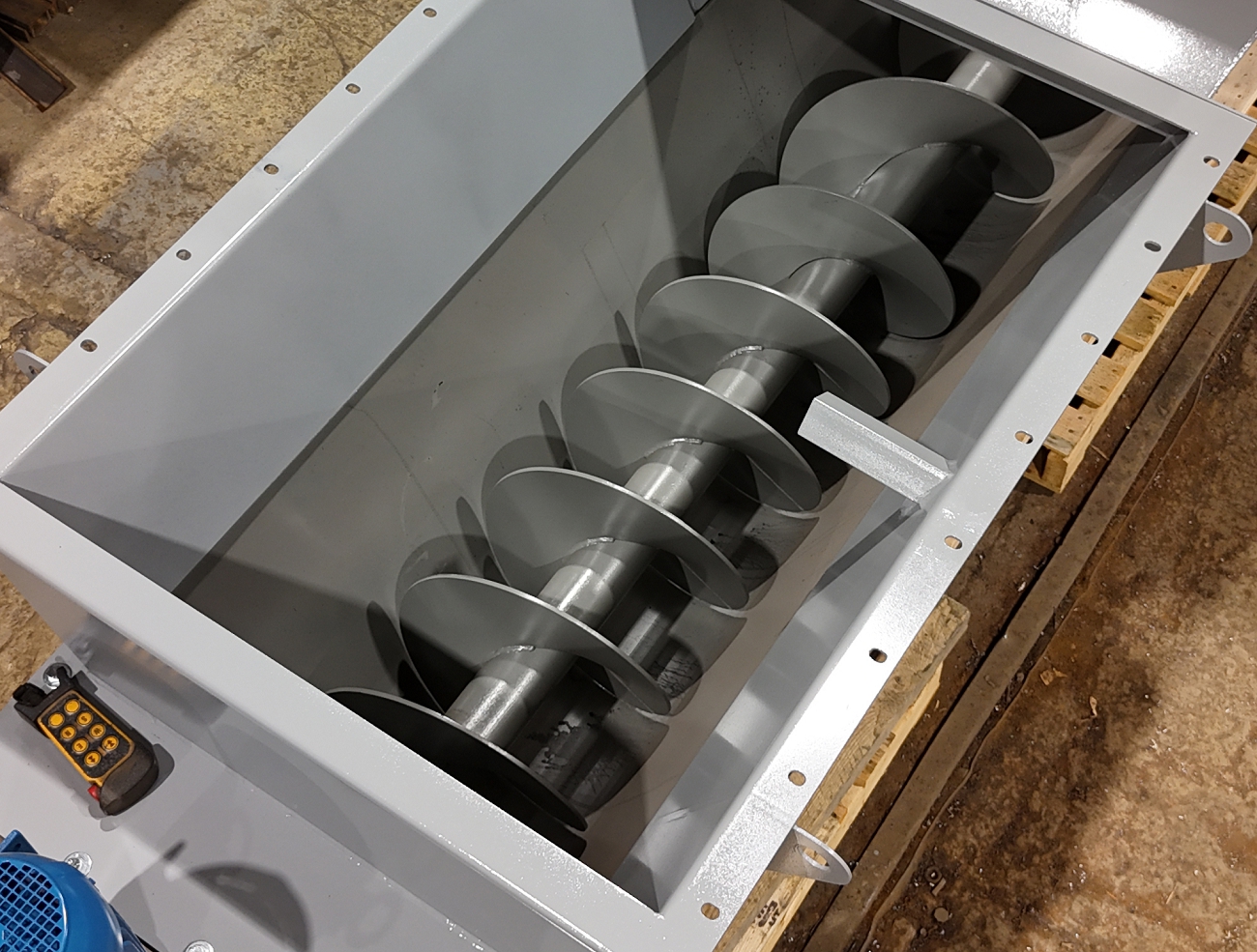
A screw conveyor moves material by rotating a helical screw inside a trough or tube. As the screw turns, material is pushed forward along the length of the conveyor.
Screw conveyors are typically used for:
Short to moderate conveying distances
Controlled, metered material flow
Applications where enclosure is important for dust control or safety
They are widely used in industries such as mining, aggregates, food processing, recycling, and manufacturing.
Key Design Elements of a Screw Conveyor
Although screw conveyors appear simple, proper design requires careful attention to several factors.
Important design considerations include:
Material type and bulk density
Particle size, abrasiveness, and moisture content
Conveyor length, incline, and required capacity
Trough or tube configuration
Drive arrangement and bearing support
Small changes in material or operating conditions can have a significant impact on performance and wear.
Advantages of Screw Conveyors
When properly applied, screw conveyors offer several benefits.
Advantages include:
Compact footprint
Fully enclosed design for dust and spillage control
Simple integration into process equipment
Good control over feed rate
Relatively straightforward fabrication for custom layouts
Able to operate at steep angles
For many applications, a screw conveyor is an efficient and economical solution.
Limitations and Trade-Offs
Common limitations include:
Higher power consumption compared to some alternatives
Increased wear with abrasive materials
Reduced efficiency over long distances
Volume limitations
Sensitivity to material characteristics and changes
In some cases, belt conveyors, drag conveyors, or pneumatic systems may be a better fit depending on the application.
Design-Build in Practice
The screw conveyor shown in the video was designed and built as part of a design-build project. This approach allows material characteristics, layout constraints, and fabrication details to be addressed together, rather than treated as separate steps.
Design-build projects reduce uncertainty, improve fit-up during installation, and allow practical manufacturing considerations to be incorporated early in the process.
When to Consider a Screw Conveyor
A screw conveyor is often a good choice when:
Conveying distances are moderate
Material flow needs to be controlled or metered
Space is limited
Dust containment is important
Understanding both the advantages and limitations helps ensure the system performs as intended over its service life.
About Ward Industrial
Ward Industrial designs and manufactures custom bulk material handling equipment, including screw conveyors, hoppers, bins, chutes, and integrated systems. We work with industrial clients on both new equipment builds and retrofit or replacement projects.
If you are evaluating conveying options for a specific application, we are available to discuss design considerations and alternatives.