Belt Conveyors - Bulk Material Handling

Custom Engineered Belt Conveyors for Bulk Material Handling in Canada

Ward Industrial Equipment designs and manufactures custom belt conveyors for bulk material handling applications across Canada and around the world. Our conveyors are engineered for heavy-duty industrial service and built to suit the specific material, tonnage, duty cycle, and operating environment of each project.

We do not sell catalogue conveyors. Every belt conveyor is purpose-designed, fabricated, and integrated as part of a complete bulk material handling system.

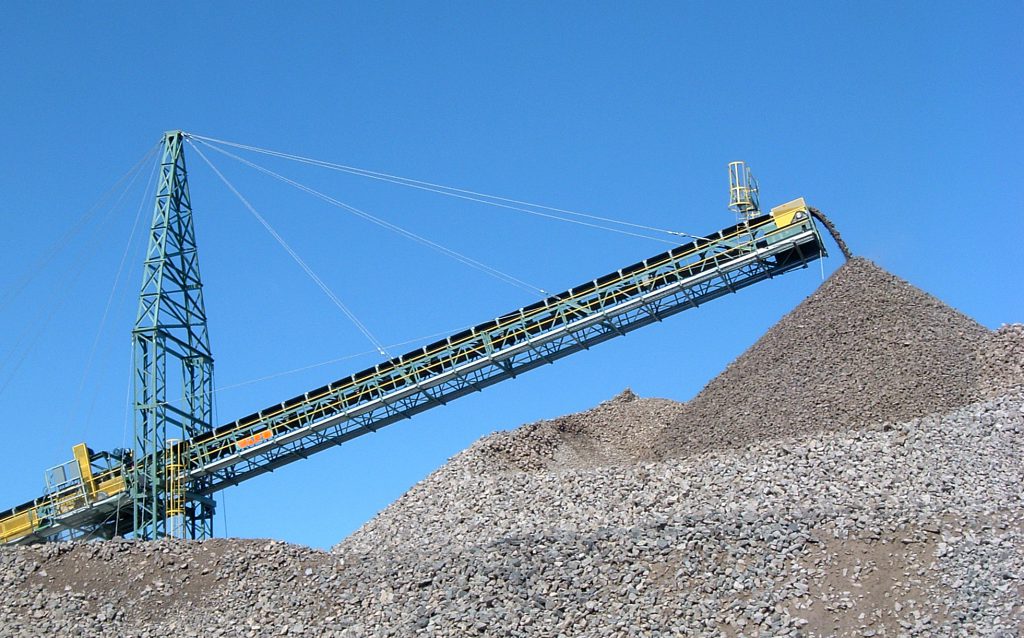
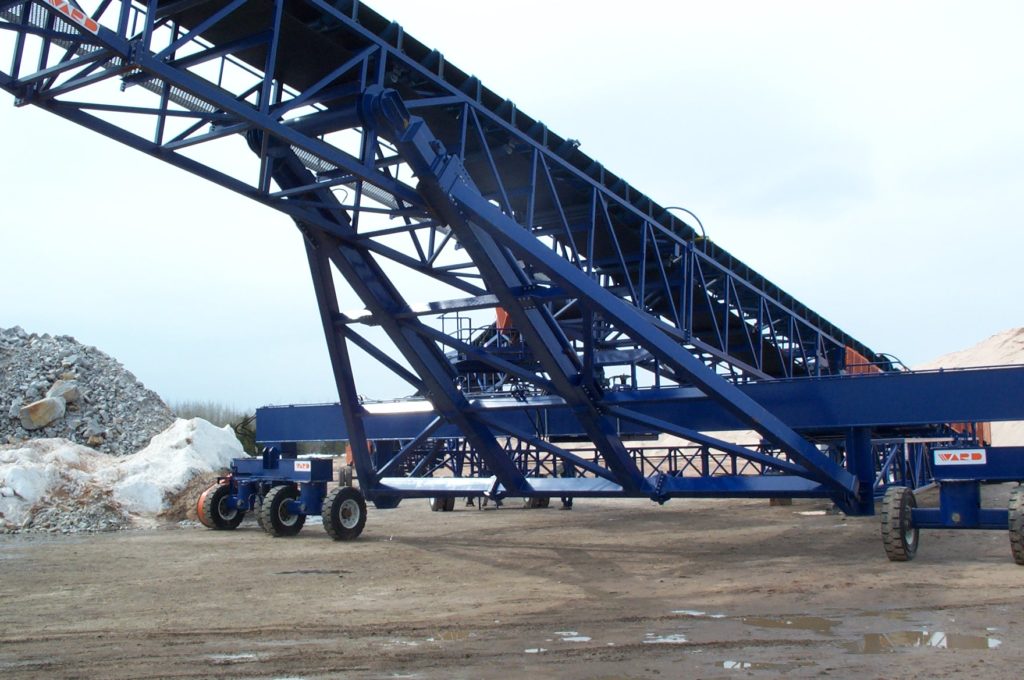
Large tower stacker conveyor stockpiling aggregate material at an outdoor site

Custom Belt Conveyor Design and Manufacturing

Belt conveyors are the most common and versatile form of bulk material handling equipment, but performance and reliability depend entirely on proper engineering. Ward designs conveyors from first principles, accounting for material characteristics, structural loading, environmental exposure, and long-term maintenance requirements.

Our scope typically includes:

  • Mechanical and structural design

  • Conveyor profile and layout

  • Drive, take-up, and pulley selection

  • Integration with feeders, screens, bins, and transfer points

  • Fabrication, assembly, and field installation support

The result is equipment that runs reliably in demanding industrial environments, not lightly built systems intended for short service life.


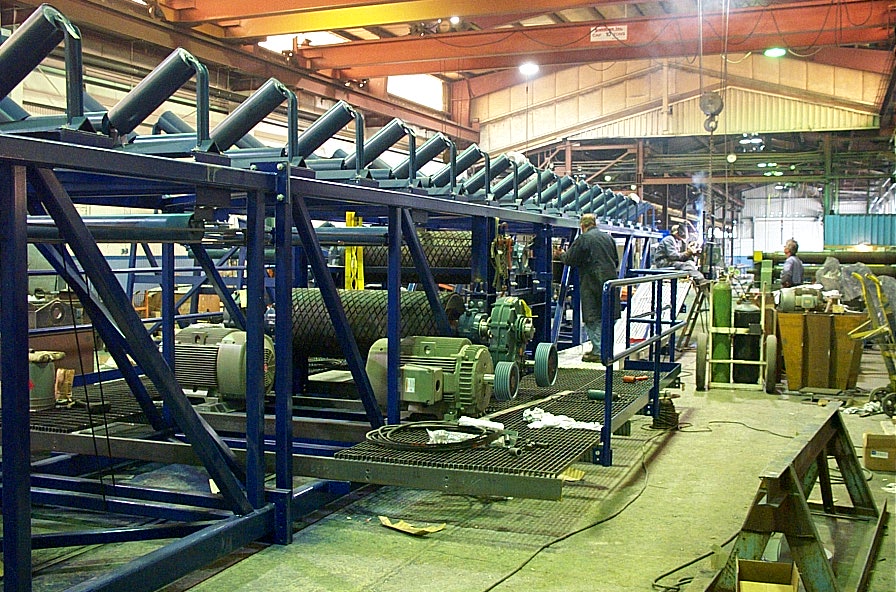
Truss-style belt conveyor shown during assembly after painting in the fabrication shop. The image shows the structural truss framework with drive assemblies, motors, and pulleys installed prior to final belt installation and commissioning. This stage highlights the conveyor’s heavy-duty construction, integrated drive arrangement, and shop assembly process before shipment to site.

Truss Conveyors

Used for long spans and elevated runs where structural efficiency and stiffness are required. Common in aggregate, mining, and bulk storage applications.

Channel Conveyors

A basic belt conveyor structure with channel iron sides and supported legs. pedestals or other structures or foundations

Overland and Long-Distance Conveyors

Engineered for high-capacity, continuous material transport over extended distances. Includes attention to belt tensions, idler spacing, power requirements, and control strategy.

Tripper and Distribution Conveyors

Used where material must be discharged at multiple points along the conveyor length. Integrated with controlled trippers, plows, or diverter systems.

Flexwall Conveyors

A specialty of Ward’s.   These conveyors have large cleats, almost buckets and accordion sides so they can have many sections each operating at different including up to vertical

Shuttle Conveyors

Designed to distribute material across bins, silos, or stockpiles with controlled travel and positioning.

Portable and Mobile Conveyors

Wheel-mounted or rail-mounted conveyors designed for relocation while maintaining structural integrity and operational stability.

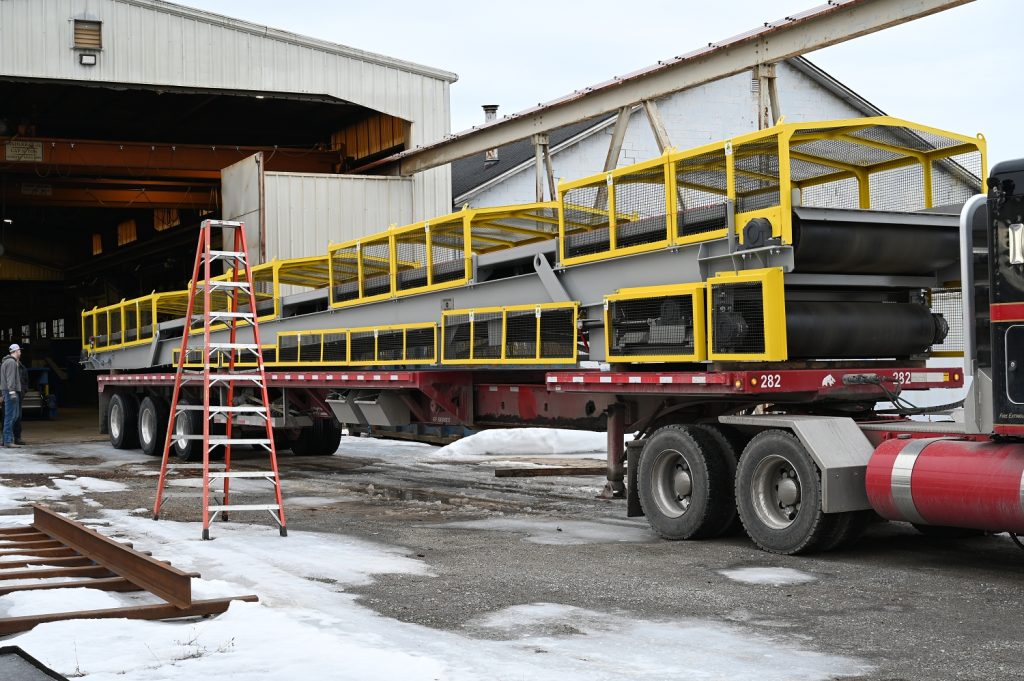
84 inch wide portable belt conveyor for steel mill scrap handling, fully guarded and prepared for shipment
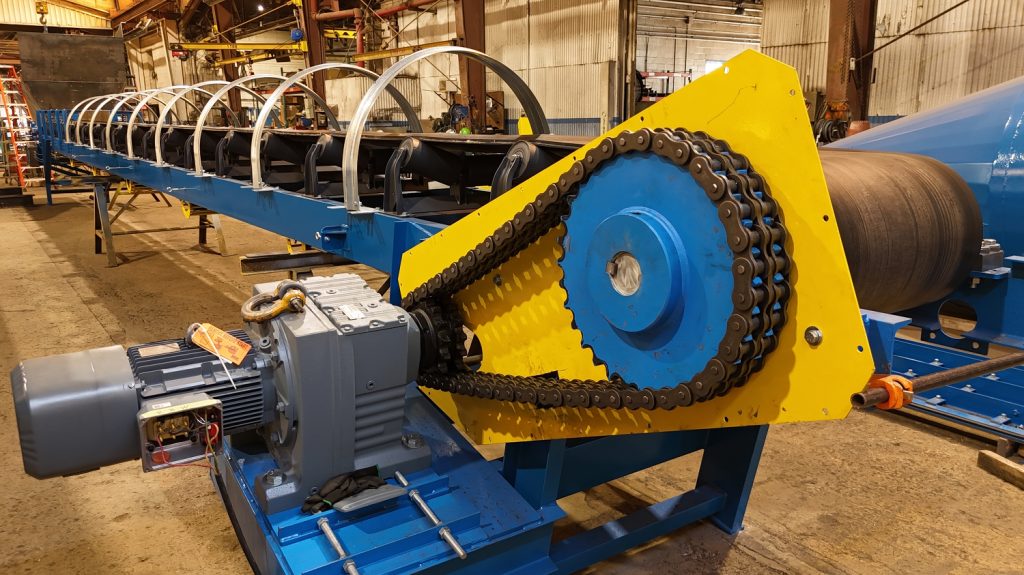
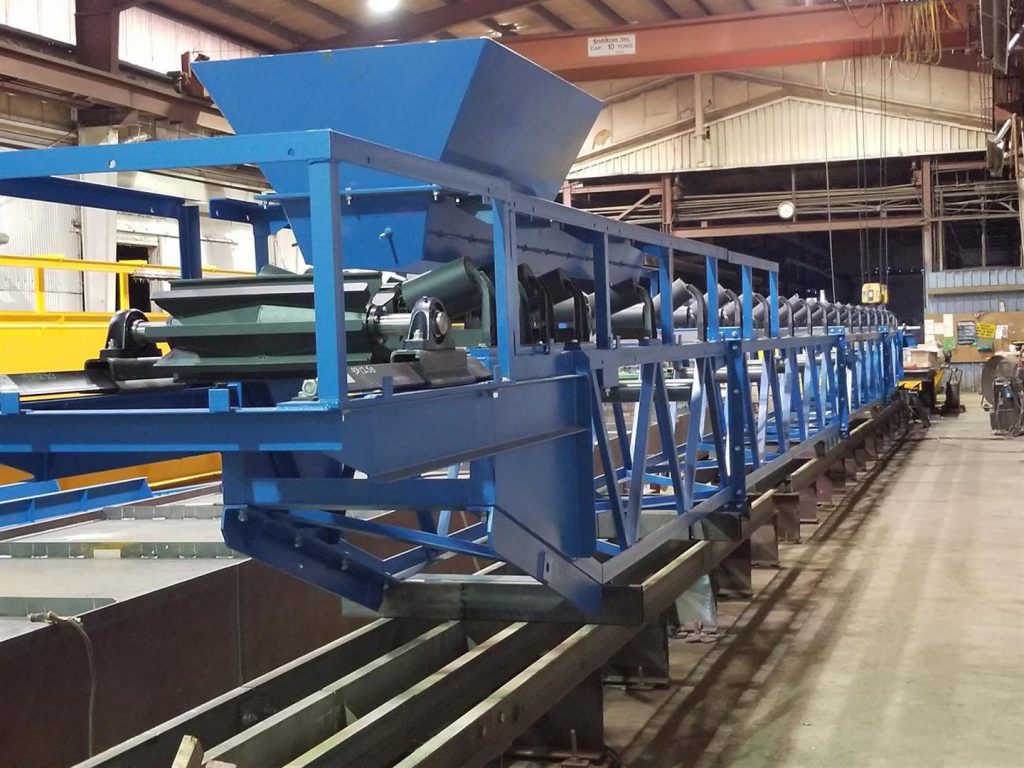
Channel frame belt conveyor with chain drive under assembly in fabrication shop

Belt Conveyor Design Considerations

Every conveyor is engineered around the realities of the application, not assumptions. Key design considerations include:

  • Material properties such as abrasiveness, moisture content, bulk density, and particle size

  • Required capacity, belt speed, and operating duty cycle

  • Conveyor length, incline, and profile

  • Structural design, including truss, channel, or gallery construction

  • Belt selection, idler spacing, and pulley sizing

  • Drive arrangement and take-up method

  • Dust control, guarding, and safety requirements

  • Environmental factors such as temperature, corrosion, and outdoor exposure

  • Canadian operating conditions, codes, and site constraints

Addressing these factors correctly at the design stage reduces downtime, maintenance costs, and premature wear.

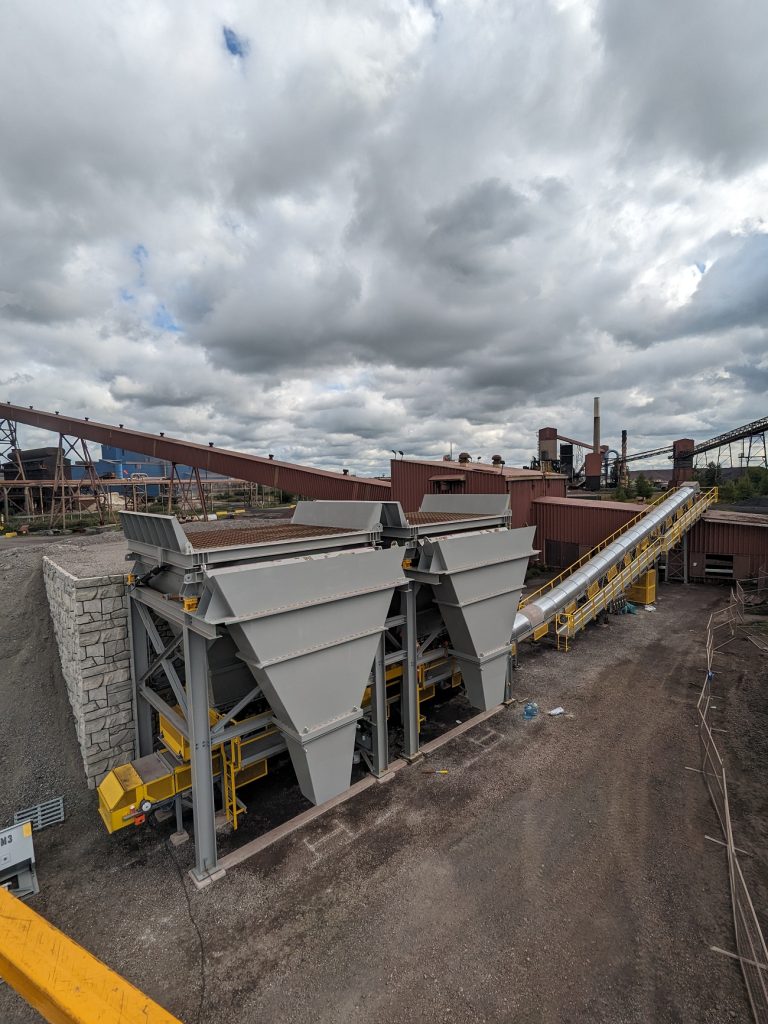
High-capacity truss conveyor with walkways and covers feeding downstream bulk material handling equipment

Integrated Bulk Material Handling Systems

Belt conveyors rarely operate in isolation. Ward routinely integrates conveyors with upstream and downstream equipment, including:

  • Apron feeders and belt feeders

  • Vibratory feeders and screens

  • Silos, bins, and hoppers

  • Gates, chutes, and transfer points

  • Structural support systems and galleries

This system-level approach ensures consistent material flow, controlled transfer points, and reduced spillage and dust.

Large mobile radial stacker conveyor with truss structure at aggregate stockpile site

Industries We Serve

Ward Industrial Equipment is a Canadian manufacturer with in-house engineering and fabrication capability. We understand the requirements of Canadian industrial operations, including climate, regulatory standards, and site access constraints.

We provide:

  • Canadian-based engineering support

  • Fabrication to industrial standards

  • Integration with existing plant infrastructure

  • Parts and service support over the equipment life cycl

Ward belt conveyors are used across a wide range of heavy industrial sectors, including mining and metals processing, aggregates, cement, power generation, and bulk terminals, often in partnership with EPC firms managing large, multi-discipline projects.

Smaller truss belt conveyor assembled in shop for metal recycling application
Gallery conveyor structure under construction with truss frame and walkway supports

Why Choose Ward for Belt Conveyors

  • Custom engineered solutions, not catalogue equipment

  • Heavy-duty structural and mechanical design

  • Proven experience in demanding industrial applications

  • Integrated system design capability

  • Long-term serviceability and maintainability

Our focus is on building equipment that works reliably, not simply equipment that looks good on paper.

Talk to an Engineer

If you are planning a new belt conveyor or upgrading an existing bulk material handling system, contact Ward Industrial Equipment to discuss your application. Our team works directly with engineers, operators, and project managers to develop practical, reliable solutions.

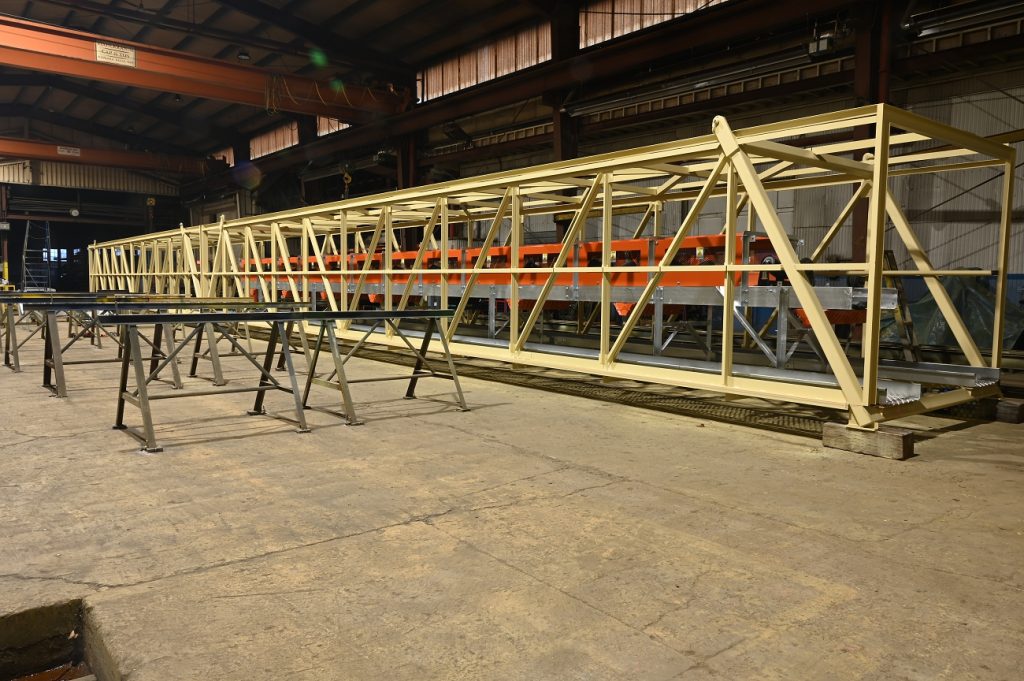
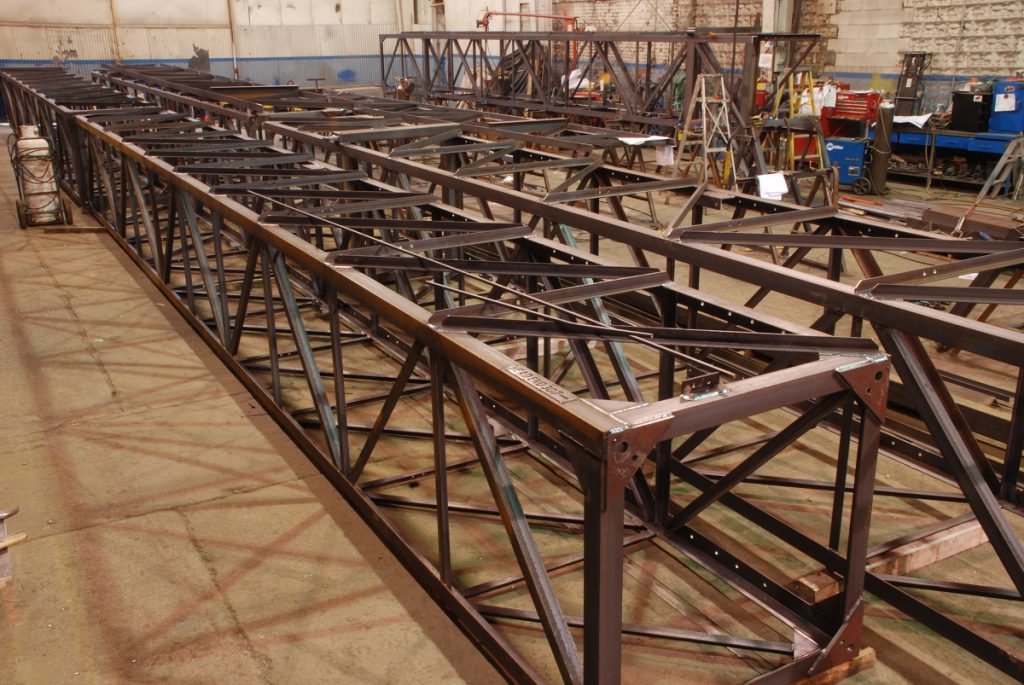
Multiple truss conveyor sections being fabricated in an industrial workshop

Working with EPC and Owner Engineering Teams

Ward Industrial Equipment regularly works directly with EPC firms and owner engineering teams on bulk material handling projects in the mining, metals, and heavy industrial sectors.

Our role is typically as the conveyor system specialist, responsible for detailed mechanical and structural design, fabrication, and coordination with adjacent equipment and civil, electrical, and controls disciplines.

We are accustomed to EPC project requirements, including:

  • Design to client and project specifications

  • Drawing and document submittals with review cycles

  • Interface definition with upstream and downstream equipment

  • Compliance with applicable codes and standards

  • Schedule-driven fabrication and delivery

  • Support during installation, commissioning, and handover

This approach allows EPCs to manage project risk while ensuring owner requirements are met with practical, buildable equipment.